How to Book Multi-City Flights Without Overpaying
I wanted to fly from Los Angeles to Barcelona, spend three weeks in Spain, then fly from Barcelona to Rome, spend a week in Italy, and return to Los Angeles fro...
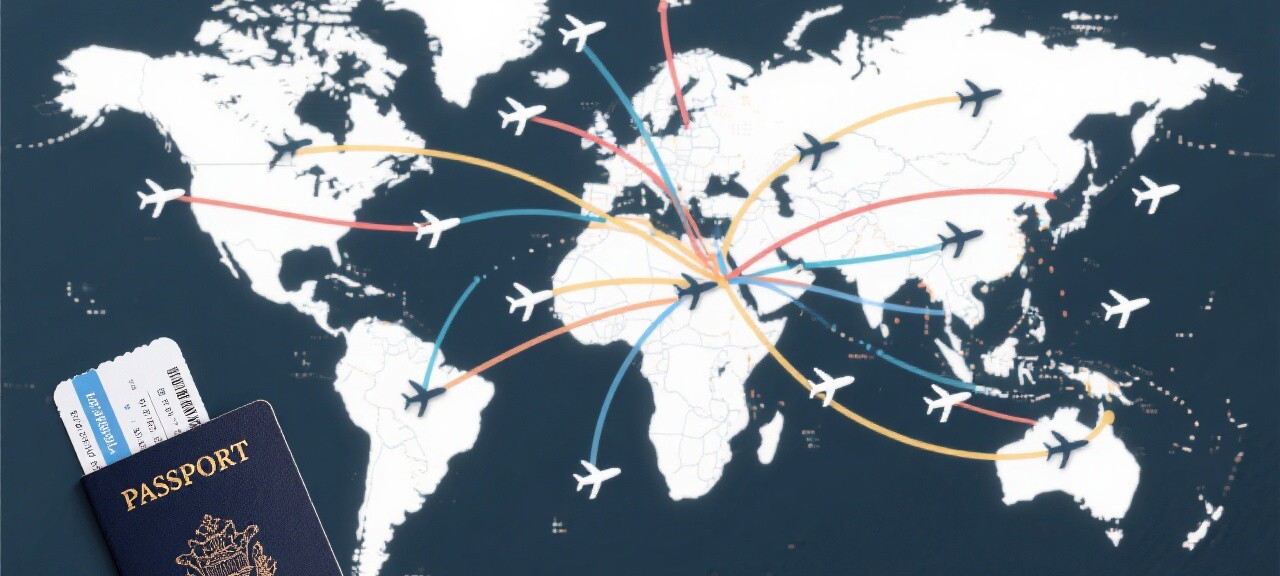
I wanted to fly from Los Angeles to Barcelona, spend three weeks in Spain, then fly from Barcelona to Rome, spend a week in Italy, and return to Los Angeles from Rome. When I searched for these three flights individually on Google Flights, the total came to $1,340. When I searched for the same itinerary as a multi-city booking, the total was $789. Same flights, same dates, same airlines. The only difference was how I searched for them.
Multi-city flight bookings are one of the most poorly understood tools in travel planning. Most travelers book separate one-way tickets for each leg of their trip, which is almost always more expensive than combining them into a single multi-city itinerary. The airlines price multi-city bookings differently because they want to encourage through-ticketing, and understanding this pricing quirk can save you hundreds of dollars on complex trips.
How Multi-City Pricing Works
Airlines build multi-city itineraries using their fare construction rules, which are governed by something called the "mileage principle." In simple terms, the price of a multi-city ticket is often based on half the round-trip fare between your origin and destination, plus half the round-trip fare between your intermediate cities. This sounds complicated, but the practical effect is that multi-city fares are frequently 30 to 50 percent cheaper than booking individual one-way segments.
My most dramatic saving came on a trip through Southeast Asia. I needed to fly Bangkok to Hanoi, Hanoi to Ho Chi Minh City, and Ho Chi Minh City back to Bangkok. Booking three separate one-way flights on VietJet and Bamboo Airways would have cost $285 total. Booking the same three flights as a single multi-city itinerary on Vietnam Airlines cost $165. The catch was that Vietnam Airlines' multi-city tool was only available on their Vietnamese-language website. I used Google Translate to navigate the booking process and saved $120 for about ten minutes of extra effort.
Google Flights has a built-in multi-city search that makes this easy. Click "Multi-city" instead of "Round trip," enter your segments, and Google Flights will search for the cheapest combination across all airlines. I always start here because it gives me a baseline price. Then I check individual airline websites, because some airlines offer multi-city discounts that do not appear on aggregators. Turkish Airlines, for example, offers a "Stopover" program that lets you add a free stop in Istanbul on multi-city bookings, effectively giving you two destinations for the price of one flight.

Common Mistakes and Workarounds
The biggest mistake people make with multi-city bookings is including too many segments. Airlines typically limit multi-city itineraries to three or four segments. Beyond that, the pricing algorithm breaks down and the fare can actually be higher than booking separately. I once tried to book a five-city itinerary through Europe, and the price came to $2,100. Booking the same cities as two separate multi-city tickets, one for the first three cities and one for the last two, brought the total down to $1,350.
The hidden benefit of multi-city bookings is the protection they offer. When you book separate one-way tickets, each segment is independent. If your first flight is delayed and you miss your second flight, the airline has no obligation to help you. With a multi-city booking on a single ticket, the airline is responsible for getting you to your final destination. I learned this the hard way when a weather delay in Chicago caused me to miss a connection to Lisbon on separate tickets. I had to buy a new one-way ticket for $340. If I had booked multi-city, the airline would have rebooked me for free.
Another advantage is the ability to build in stopovers. Singapore Airlines allows a free stopover in Singapore on many multi-city itineraries. Emirates offers a free stopover in Dubai. These are not just layovers, they are opportunities to see another city without paying extra airfare. I booked a multi-city ticket from Los Angeles to Bangkok with a three-day stopover in Singapore, all for the same price as a direct flight to Bangkok. I spent those three days eating at hawker centers and walking through the Gardens by the Bay.
Another common error is mixing airlines in a multi-city search. Google Flights will show you combinations of different airlines, but these are often more expensive than sticking with a single airline or alliance. If I am flying through Europe, I try to book everything on Star Alliance carriers (Lufthansa, Swiss, Austrian, SAS) because their interline agreements mean they price multi-city itineraries more aggressively. The same principle applies to Oneworld (British Airways, Iberia, Finnair) and SkyTeam (Air France, KLM, Delta).
Sometimes the cheapest multi-city option involves an open-jaw ticket, where you fly into one city and out of another. A round-trip from New York to Paris might cost $650, but an open-jaw from New York to Paris and returning from Rome to New York might cost only $580. The open-jaw saves you the cost of a train ticket or budget flight between Paris and Rome, which would be at least $50 to $100. I always check open-jaw pricing before booking a standard round-trip, and about 40 percent of the time, the open-jaw is cheaper.

Multi-city bookings require a bit more planning than simple round-trips, but the savings are consistently worth the effort. I have saved an average of $250 per trip by booking multi-city itineraries instead of separate one-ways. The key is to start with Google Flights to get a baseline, then check individual airline websites for better deals, and always compare the multi-city price against the sum of individual one-way fares to make sure you are actually saving money. Sometimes the airlines get clever and the multi-city price is not cheaper. But most of the time, it is, and that difference goes straight into your travel budget.
Digital nomad and points & miles strategist. Sarah has flown business class for free more times than she can count.
Related Reading
Explore more articles on this topic from our travel guides and tips.
-
1
The 24-Hour Rule: How Timing Your Flight Booking Saves Hundreds Travel Hacks · Apr 13, 2026
-
2
How to Use Skyscanner Like a Pro to Find Hidden Flight Deals Travel Hacks · May 9, 2026
-
3
Budget Travel Mistakes That Cost Me Hundreds of Dollars Budget Travel · Apr 22, 2026
-
4
How to Pack for Two Weeks in a Carry-On Only Travel Hacks · May 9, 2026