How to Pack for Two Weeks in a Carry-On Only
I watched a woman at the baggage carousel in Lisbon cry. Her suitcase had been lost on a connecting flight through Frankfurt, and she told the airline represent...
I watched a woman at the baggage carousel in Lisbon cry. Her suitcase had been lost on a connecting flight through Frankfurt, and she told the airline representative that she had packed everything for her two-week Portugal trip in that one checked bag. No backup, no essentials in her carry-on. She was wearing flip-flops, a sundress, and had no change of clothes for the Lisbon evening chill. I was standing there in my carry-on-only setup, everything I needed in a 40-liter Osprey Farpoint backpack, and I realized that my packing system was not just about saving money on baggage fees. It was about freedom.
I have not checked a bag in three years and 47 countries. My system has been refined through trial and error, through tropical heat waves and Baltic winter storms, through business meetings and mountain treks. Here is exactly what I pack and how I make it work.
The Clothing System: Five Layers, Infinite Combinations
My clothing rule is simple: pack for five days, do laundry on day six. I bring exactly five shirts, two pairs of pants, one pair of shorts, seven pairs of underwear, and three pairs of socks. Everything is merino wool or quick-dry synthetic. Merino wool costs more upfront but can be worn for days without developing odor. I once wore the same Icebreaker merino t-shirt for four days during a trek in Patagonia and my travel companion, who had no idea, complimented me on how fresh I looked.
The layering system is what makes carry-on travel work in any climate. I pack one lightweight down jacket (Patagonia Nano Puff, $229 but worth every penny) that compresses to the size of a grapefruit. Under that, a merino wool base layer. Over that, a rain shell that weighs 11 ounces. With these three layers, I am comfortable from 30 degrees to 70 degrees. For warmer weather, the down jacket stays in the hostel and I wear a linen button-down that I bought in Hoi An, Vietnam, for $8.
Shoes are the biggest space-waster in any bag. I bring exactly one pair: a pair of black Allbirds Tree Runners that weigh 14 ounces, look decent enough for a nice restaurant, and can handle 15 miles of walking in a day. I wear them on the plane. That is it. No sandals, no boots, no backup sneakers. One pair of shoes, worn on your feet, not taking up space in your bag.

The Toiletry and Tech Setup
Liquids are the main constraint for carry-on travel, thanks to the TSA 3-1-1 rule. I use a contact lens case for small amounts of face moisturizer and sunscreen, which saves massive amounts of space compared to full-sized bottles. My entire toiletry kit fits in a quart-sized Ziploc bag and includes: a solid shampoo bar from Lush ($11, lasts 80 washes), toothpaste tabs from Bite ($12 for a two-month supply), a deodorant stick, and a small tube of Dr. Bronner's soap that works for body, hair, and laundry in a pinch.
The psychological benefit of traveling light is hard to quantify but impossible to ignore. When you have only one bag, you are never weighed down by your possessions. You can walk for miles without fatigue. You can navigate crowded markets and narrow staircases without struggle. You can change plans on a whim because your entire life is on your back. This freedom is the real reward of carry-on travel, and it is worth more than any baggage fee you might save.
In Lisbon, I met a traveler named Sarah who had been on the road for eight months with a 65-liter backpack that weighed 22 kilograms. She was exhausted, her shoulders were in constant pain, and she had missed two trains because she could not run to the platform with her load. I helped her repack, eliminating half her clothing and all her "just in case" items. Her pack went from 22 kilograms to 9 kilograms. Two weeks later, she sent me a message saying the change had transformed her trip. She was walking more, exploring more, and enjoying every day instead of dreading the transitions.
For tech, I carry my iPhone 15 Pro, an Anker 20,000 mAh power bank ($36), a 3-foot braided USB-C cable, and Apple AirPods. That is my entire electronics kit. No laptop, no tablet, no camera. The iPhone takes photos that are good enough for social media and memories, the power bank keeps everything charged through long travel days, and the AirPods provide noise cancellation on flights and buses. I have never once wished I had brought a laptop while traveling.
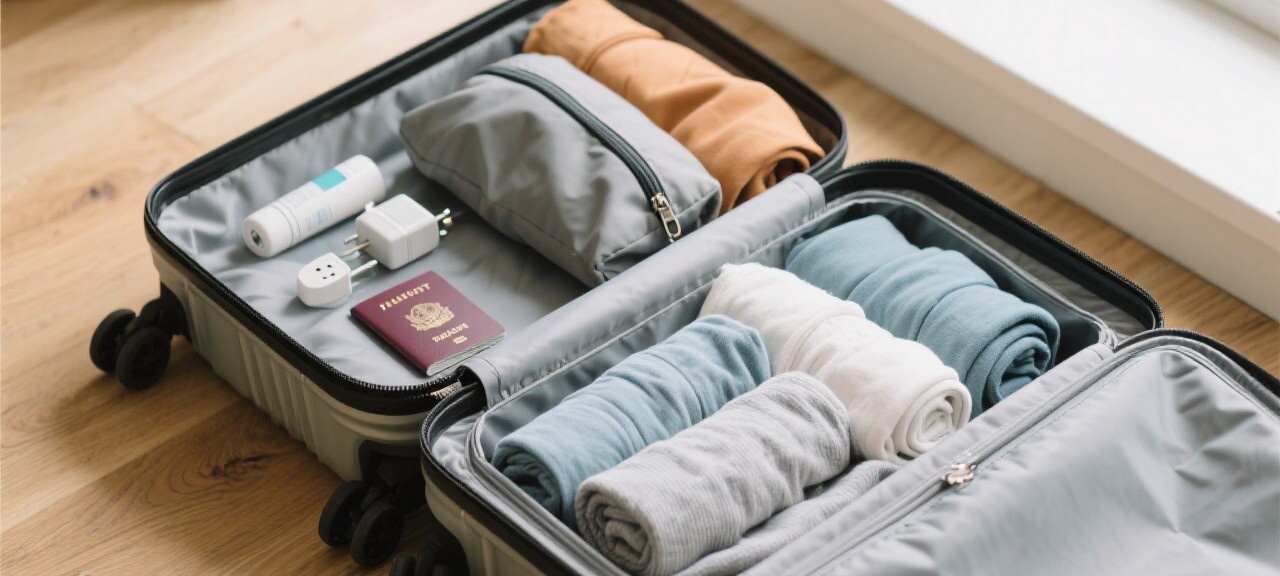
The packing cube system is what holds it all together. I use three Eagle Creek packing cubes: one medium for clothes, one small for underwear and socks, and one slim for toiletries and electronics. Everything has a designated place, which means I never have to unpack completely. I can open the medium cube in a packed hostel dorm at midnight without disturbing anyone and find exactly what I need by touch.

Carry-on-only travel saves money on baggage fees (typically $30 to $60 per checked bag per flight), eliminates the risk of lost luggage, forces you to be intentional about what you bring, and makes every transition between destinations faster and less stressful. I can go from airplane to train to hostel in under 20 minutes without waiting at a carousel or lugging a 50-pound suitcase up narrow European staircases. The freedom of traveling light is not a luxury. It is a choice, and once you make it, you will never go back.
Budget travel expert who has visited 60+ countries on a shoestring budget. She shares practical tips to help anyone travel for less.
Related Reading
Explore more articles on this topic from our travel guides and tips.
-
1
The 24-Hour Rule: How Timing Your Flight Booking Saves Hundreds Travel Hacks · Apr 13, 2026
-
2
How to Get Free Hotel Nights on Your First Booking Hotel & Flight Deals · Apr 21, 2026
-
3
Exploring the Yucatan Peninsula on a Shoestring Budget Destination Guides · May 2, 2026
-
4
How I Traveled Japan for 21 Days on $1200 Budget Travel · May 10, 2026